
Cave Ghouls:
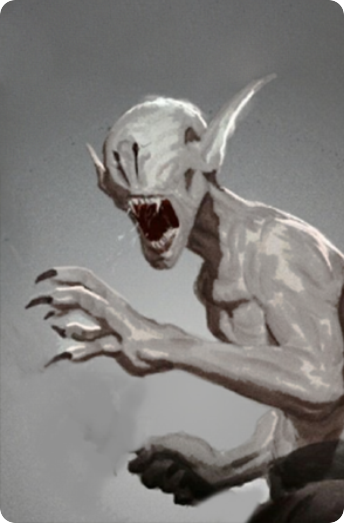
Inescapable and ever present. Besides long-forgotten ruins, Cave Ghouls seem to be the only remnant of what Vermeria used to be. They are noted by a stone-like pallor, gnarled teeth, and pointed ears. Their development within the underground of Vermeria has caused many ghouls to lose function of their eyes in lieu of the development of other senses. Older, chiefer ghouls have developed without eyes entirely.These deep-dwellers are feral flesh-eaters, leaving the comfort of their caves and tunnel networks typically in the dead of night to hunt in packs for fresh, raw meat. They are frail, yet quick, united, and ferocious. A ferocity made terrible by a distinct lack of civility, or care for self-preservation.The form of a ghoul is hunched and gaunt. Large, thickly developed knuckles on clawed hands, which connect to lengthened forearms suggest a life of walking and bounding on all fours. Once a ghoul has caught onto a hunt, they will not relent until either party is killed. Hordes of ghouls have been known to topple and climb over one another to scale walls.Time has left the ghouls with only fledgling notions of society. Despite their ferality, they dwell in ramshackle shelters and enjoy collecting trinkets, even fashioning roughspun clothing from scraps of ripped hide.
Varieties:
‘Weakened’ Ghouls:
Whilst not a true variety or species variation of Cave Ghouls, their vast number has led to a strange adaptation of some of their ilk. Whilst most often found underground in their caves and tunnels, some ghouls can be found roaming on the surface during daylight hours. Weakened and disoriented from their lack of pack support, over exposure and at constant threat from other predators, these ghouls are typically found alone. Some are simply Cave Ghouls that got trapped in some way or another and were unable to return to their nests, others have spent extended time on the surface and suffer for it.The name however should be taken lightly. Still a veritable predator, weak ghouls retain their talent for hunting targets on all manner of terrain. Bounding on all fours, deadly claws lunged forth at whatever target they can find, ‘Weakened’ Ghouls can still easily kill an unsuspecting man.Corrupted Ghouls:
Their massive presence on the Vermerian continent has resulted in many ghouls falling under the influence of other creatures, magical entities and celestial events. Be it the Hollowed Ghouls borne of dark magical influence in their tainted nests, the Crystalline Ghouls infected with parasitic gemstone growths buried beneath the earth, or those left in a persistent state of undeath by necromantic magic weaved in centuries past, ghouls show a marked adaptability. Subject to higher powers, they often lose part of themselves in exchange for increased ability.These ghouls however suffer as outcast members of their flock. Be it the change in their scent, or the magic itself at work in most cases, corrupted ghouls are often targeted by their natural counterparts. Ghouls mercilessly kill their corrupted brethren in order to protect their nests, but this typically results in more of their kind falling to the corruption in play.
Risen:
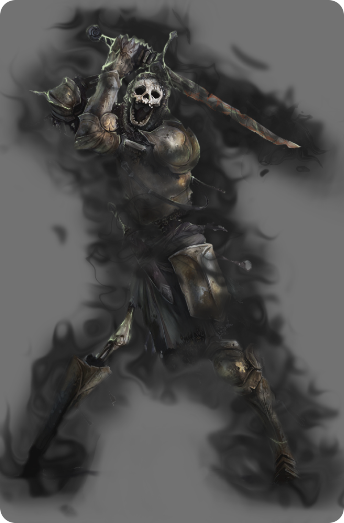
Shambling across the old ruins of Vermeria are blackened skeletons, and desiccated corpses permeated by dark energies like clouds of thick ash and smoke, known as the Risen by those in Van Brinkmann’s land. Cruel and accursed sentinels with no end in sight take the lives of those in their path to replenish and grow their numbers. It is said that those killed by the Risen are damned to join their armies, reborn after death as a fellow sentinel.The Risen are said to have been created by a Hollow-devoted necromancer in Vermeria’s early history. Using the Risen Catalyst, the necromancer cursed portions of the land, causing those who died or rested within them to rise and join an army of undead sentinels who, when destroyed, would reform and rebind their skeletons to walk once more. A Risen must be turned to ash to be truly destroyed, however destroying the skull of a Risen can serve as a temporary means of preventing their reformation.In rare cases when the structure a group of Risen were serving as sentinels for has degraded significantly or been destroyed by other influences, Risen will form a roaming warband in search of a new place to righteously protect. Some sightings of these warbands have reported the presence of Risen horsemen, though this is unconfirmed.
Vermerian Bears:
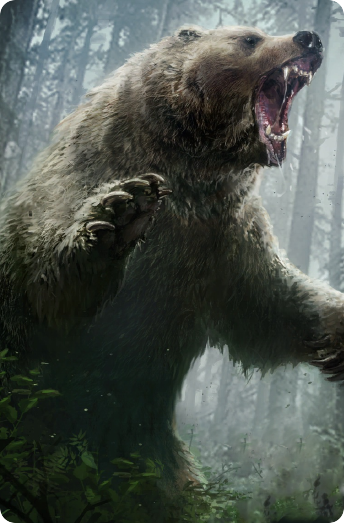
The common brown and black bears of Vermeria are surprisingly similar to their Old World counterparts despite the differing environmental factors. Typically found in cavernous regions near bodies of water or rivers, Vermeria’s bears partake in a slightly more carnivorous diet than typical bears due to an increased food source.While potentially more docile than their Old World relatives, ignoring humans unless provoked, they are still active apex predators in the areas they do roam. From elk to trolls, bears will aggressively pursue their prey through dense forests and grasslands, able to down their fellow predators in large numbers.
"Direbears":
A vague missive recovered from early expeditionary efforts into the New World continent, thought to originally describe common Vermerian Bears, has recently been brought back into the light due to evidence pointing towards a potential alpha variation of Vermeria’s bear species named ‘Direbears’ by some. These bears are described as dwarfing their lesser relatives, almost exclusively inhabiting deep cave networks where they feed on wandering Cave Ghouls actively. These so called super-bears are vastly stronger than their common counterparts, destroying smaller ghoul nests single-handedly in order to protect their perceived territory.Whilst no direct sightings or tracks have been found to indicate their continued existence, skeletal remains indicate a much larger bodied bear species does call the New World its home.
Vermerian Boar:

Whilst lauded after by would-be huntsmen of the Old World for their bristled hides and trophy-worthy skulls, the boar found in Vermeria diverged long ago from their fellow swine species. The boar found in Vermeria have been moulded by the dangers of the wilderness, growing in size to become a more intimidating presence, driving off most of the common threats with their aggressive and brutish nature. Highly territorial, Vermerian Boar will openly attack those that approach them - be it humans, ghouls, wolves, or even bears.Boars do not typically travel together in Vermeria unlike their old world counterparts, their larger nature and increased willingness to partake in a carnivorous diet moulding them into a more volatile, individual beast. This does however make them easier targets for hunters, in theory, as they do not have to worry as much about being rushed by multiple boar upon launching their attack.
Trolls:
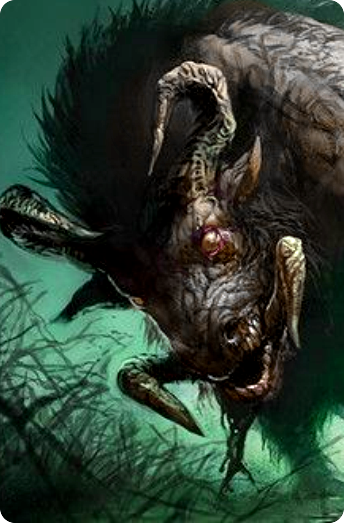
Hulking beasts, bound in thick mottled hides and patchy bristled fur, Trolls are near the top of the food chain in Vermeria. Endlessly aggressive and lacking fear, these behemoths will tackle anything that crosses their paths, goring them with their tusks and horns. With a natural resistance to most forms of bladed weapons thanks to their hides, high velocity firearms such as muskets and blunderbusses are deemed most effective against these beasts, and failing that blunt force has proven effective at incapacitating charging Trolls.The blood of trolls produces a notable effect on human bodies when consumed, bolstering their strength temporarily in exchange for a massive loss in their stamina once the effect wears off. Those that consume Trolls Blood are often left ravenously hungry afterwards, with a lingering preference for meat until the hunger is satiated.
Slimes:
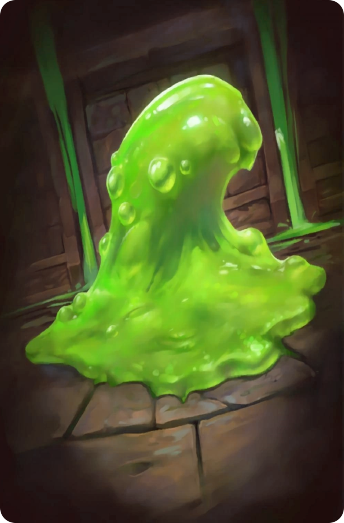
In the swamps and mires of Vermeria magic seeps into the earth itself, allowing for all manner of strange creation to spring forth from the muddy waters. While many assume this to be the origin of the eponymous Slimes, they are in fact a strange remnant of transmuting magic gone wrong and since found its way to replicate within nature like any other creature. Ruined stone temples filled with slime, living and inert, show how deeply entrenched the magic has become, places once presumably housing humanity are entirely consumed by the magically charged gels.Oddly, Slimes seem to behave much like the Risen, guarding their strongholds and bastions with an unmatched aggression to all other living life that dares approach them. It is extremely rare to see slimes not near one of these such structures lost to time, and rarer still for them to venture outside of areas with a high presence of water.Slimes seem to adapt somewhat to their environment despite this, with reports of slimes attuned with fire and ice spotted across Vermeria.
Elementals:
Foul monstrosities born of a powerful magical entity in the Vermeria region known as The Weald, Elementals are a malediction of the already twisted Ghouls of Vermeria. Little trace of their former selves remains in the elementals, but it is known that they were created from ghouls in a misguided attempt to ‘correct’ their corruption. Four main classifications of Elementals exist, following the traditional four elements - Earth, Wind, Water and Fire.Other minor magical entities are often considered to be elementals of some description, but whether they were created in The Weald or existed before it is nigh impossible to tell. Elementals have surprisingly retained their ability to replicate despite their massively altered forms, with nests appearing in locations tied to their respective elements.Elementals are extremely dangerous beasts to contend with thanks to their purely magical natures. The most common form of elementals in the wild are seemingly only ‘minor’ varieties of elementals, with known encounters with larger elementals being reported by both Dunwater Bay colonists and D’Leon company men who were present at The Weald settlement.
Earth Elementals:
Living stone comprises the basis of Earth Elementals, retaining the most similarities with ghouls thanks to their solid bodies and humanoid forms. Able to harness basic terrakinesis abilities, disturb geological bodies, and be extremely durable, these elementals are surprisingly solitary, often seeking areas away from other living creatures. They house a core-like structure in their chests where a heart would typically be found, coated in multiple layers of dense stone.
Air Elementals:
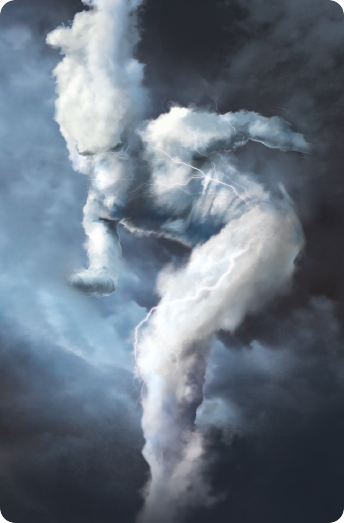
The most volatile of the elemental varieties reported in Vermeria, Air Elementals are effectively living cyclones - violent twisting gusts of air which move across the land and through the sky with ease. Employing a control over wind and even manifesting minor lightning abilities, air elementals are without a doubt the most difficult to combat when faced but do seemingly have a ‘core’, allowing a well placed arrow or bullet to down them.
Water Elementals:
The presence of water just about everywhere makes Water Elementals all the more threatening. Hiding in bodies of water akin to crocodiles and alligators, water elementals are nearly indistinguishable from water itself, though they are notably denser. Taking on a humanoid form when travelling on land, they manipulate water in all of its forms to attack prey, though typically attack by striking with blasts of water. Their core only manifests when in their humanoid form, a strange slushy object housed in their ‘head’.
Fire Elementals:
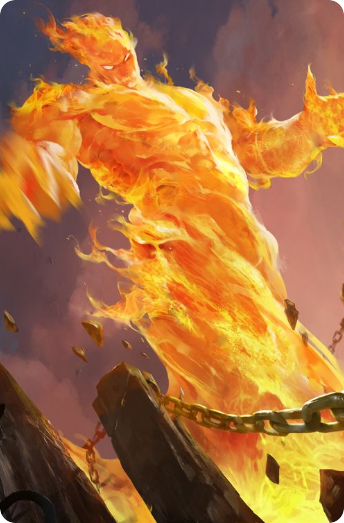
Fire itself comprises the last of the known elemental archetypes, violent and uncontrolled with the greatest possible threat to living things out of the four. Often found in places where fire thrives such as forest fires and lava pools, these elementals seemingly seek to see all plant life succumb to fire, actively expanding outwards from their nests. Fire elementals can appear humanoid, though they only take on this form when around humans or humanoid creatures, otherwise appearing as pure fire, spreading across flammable surfaces and leaving an ashy trail behind them.


Giant Spiders:
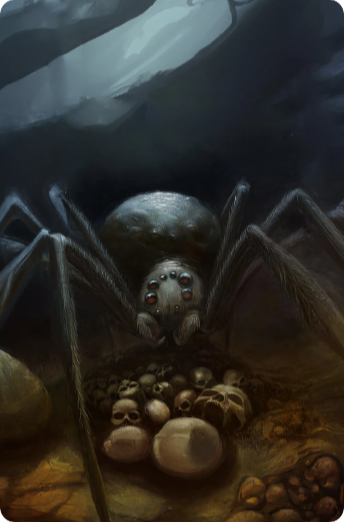
Whilst giant spiders are not unique to the New World, the species variation on display in Vermeria and the New World at large shows an uncommon set of behaviours for them. Most giant spiders tend to be solitary creatures, much like their common household and garden varieties. Building large nests out of dense silken webs to catch prey and attract mates, their only true difference from regular spiders is usually their size.In Vermeria however, collectives of giant spiders make caves and ruined tombs their home, working together to build increasing dense networks of webs capable of trapping significantly larger prey. Whilst your typical giant spider might feed on birds, squirrels or rats, Vermerian Giant Spiders are capable of trapping weakened ghouls that stray into their dens when working in unison.Most of these New World spiders are relatively mundane, their large fangs being more than enough to serve their hunting and killing, but a select few display potent venom glands behind their bites. A powerful neurotoxin, injected through partially hollow fangs, prey are slowed as their nervous system begins to falter and their heart struggles to beat.